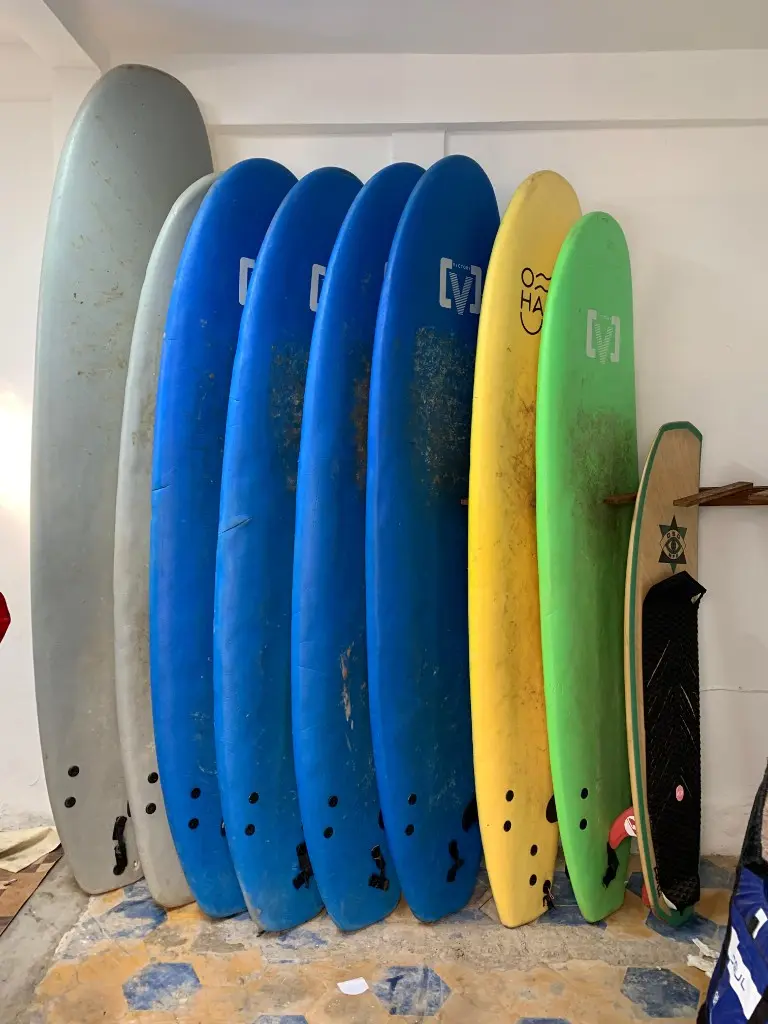
Surf Wax for Your Board: Complete Guide 2026
TL;DR
How do you wax a surfboard? Wax types (cold, cool, warm, tropical), application, maintenance, and mistakes to avoid. Expert surf wax guide for beginners and intermediates.
Surf Wax for Your Board: Complete Guide for Perfect Grip
Quick definition: Surf wax for your board means applying paraffin to the deck (top face) to create grip and prevent your feet from slipping during the pop up, take-off, and manoeuvres. The right wax, applied according to water temperature, turns a slippery board into a stable surface — a sine qua non for any successful session.
Introduction
You have mastered the pop up on sand, your board floats perfectly — then on your first take-off in the ocean, your feet slide backward and you end up in a wipeout. A frequent cause? Missing, poorly chosen, or poorly applied surf wax. Wax is one of the least expensive pieces of equipment (€3 to €6 per bar) but among the most decisive for your safety and progression.
This 2026 guide explains how to wax your surfboard: choosing the type (Cold, Cool, Warm, Tropical), base coat / top coat application technique, maintenance, wax removal, and alternatives to classic wax. Whether you surf the temperate waters of Biarritz, the swells of Essaouira, or the tropical waves of Bali, the principles remain the same — only water temperature changes.
At Essaouira Surf Camp School, we wax equipment before every beginner lesson and explain the technique to students who already own their board. This guide condenses years of field practice on the Moroccan Atlantic coast.
Why Waxing Your Surfboard Is Essential
The direct answer: without wax, a resin or smooth foam deck becomes as slippery as a wet window. Your feet do not hold during the pop up, you lose balance at take-off, and you risk violent falls.
Grip and Performance
Wax creates a layer of adhesive micro-bumps that increase friction under your bare feet or under a shorty. This grip enables:
- A stable pop up without feet sliding backward
- A solid stance in trim and turns
- Manoeuvres (cutback, snap) without losing contact
Safety
A wipeout caused by a slipping foot can throw the surfer head-first. On a reef or in shorebreak, the consequences are serious. Wax is safety equipment as much as a performance accessory.
Foam Boards vs Hard Boards
| Board type | Deck | Wax needed? |
|---|---|---|
| Recent foam (Torq, NSP, Olaian) | Integrated EVA grip | No (except worn zones) |
| Budget foam | Smooth deck | Yes — Warm/Tropical |
| Epoxy / PU | Smooth resin | Yes — always |
| Longboard with tail pad | Rear pad + smooth nose | Wax on nose only |
Types of Surf Wax: Cold, Cool, Warm, Tropical
The direct answer: choose your wax based on water temperature, not air temperature. Each formula contains additives that soften or harden the paraffin according to ambient heat.
Temperature Table
| Wax type | Water temperature | Common colour | Typical spots |
|---|---|---|---|
| Cold | < 14 °C | Purple / Dark blue | Brittany winter, northern Portugal |
| Cool | 14–18 °C | Green / Light blue | Hossegor spring, Essaouira winter |
| Warm | 18–24 °C | Orange / Yellow | Essaouira summer, Biarritz summer |
| Tropical | > 24 °C | Red / White | Southern Morocco, Canaries, Bali |
Base Coat vs Top Coat
Two complementary layers:
- Base coat (undercoat) — harder paraffin, applied diagonally on a bare deck or after wax removal. It grips the deck and serves as foundation.
- Top coat (surface layer) — wax suited to the day's temperature, applied in cross-hatch over the base. This is the layer that provides daily grip.
Reference brands: Sex Wax, Sticky Bumps, Mr Zog's, Matunas, Combi (dedicated base coat).
Classic Mistake: Wrong Wax for the Temperature
- Tropical wax in cold water (< 16 °C) → wax hardens, becomes smooth, zero grip
- Cold wax in warm water (> 22 °C) → wax melts, runs onto rails, dirties the wetsuit
- Solution: check water temperature on Windguru or on site, adjust the wax
In Essaouira, water ranges from 16 °C in January to 20 °C in August: Cool in winter, Warm in summer. Our instructors adapt lesson equipment wax every morning.
How to Wax Your Surfboard: Step-by-Step Technique
Here is the complete method for optimal grip, from a new board to weekly maintenance.
Step 1: Prepare the Deck
- Dry, clean board
- If old wax is thick (> 3 mm) or mixed colours: perform complete wax removal
- New board: go straight to base coat
Step 2: Apply the Base Coat
- Hold the wax bar at 45° to the deck
- Apply in diagonal lines from front to back (nose to tail)
- Cover the entire zone where your feet will go — generally the front two-thirds of the deck
- Press moderately: the base should be uniform, not a mountain of wax
- Let rest 5 minutes
Step 3: Apply the Top Coat
- Choose wax suited to the day's water temperature
- Apply in cross-hatch: first left-to-right diagonal, then right-to-left diagonal
- Focus on three zones:
- Pop up zone (centre) — where your knees and feet land
- Front zone — front foot in stance
- Rear zone (tail) — back foot for turns
- Target thickness: 1 to 2 mm — you should see the cross-hatch, not a cake of wax
Step 4: Fill Smooth Zones (Optional)
With a wax comb, lightly scrape the bumps to create texture, or add a thin layer on worn zones after several sessions.
Advanced Technique: Wax According to Board Type
| Board | Zone to wax | Tip |
|---|---|---|
| 6'0 shortboard | Centre + tail, reduced zone | Less wax = less weight |
| 7'6 funboard | Wide centre + tail | Standard |
| 9'6 longboard | Entire deck before tail pad | Nose waxed for noseriding |
| Foam without grip | Full deck | Light Warm/Tropical layer |
| Board with tail pad | Nose + centre only | Rear pad = no tail wax |
Wax Removal: When and How to Remove Wax
The direct answer: perform complete wax removal every 2 to 3 months or when wax accumulates (> 5 mm), changes colour (dirt mix), or no longer holds despite a new layer.
Wax Removal Method
- Sun exposure — 10 to 15 minutes, wax softens
- Scraping — plastic spatula or wax comb, from tail toward nose
- Cleaning — wax remover (spray or liquid), cloth, then turpentine if needed
- Rinsing — fresh water, complete drying
- New base coat + top coat
Why Not Stack Indefinitely
Wax that is too thick:
- Weighs down the board (100 to 300 g)
- Becomes hard and grainy — reduced grip
- Traps sand that scratches the wetsuit and your skin
- Hides pressure dings on the deck
Alternatives to Surf Wax
Tail Pad (Rear Pad)
Adhesive foam pad on the tail — replaces rear wax. Essential on shortboard and funboard. Combined with wax on centre and nose.
Front Pad / EVA Grip
Some boards integrate a full front pad. High-end foam boards (Torq, NSP) often have a full EVA deck — no wax needed.
Wax Comb and Daily Maintenance
The wax comb allows you to:
- Scrape bumps to refresh grip between sessions
- Remove excess melted wax in summer
- Create directional grooves (advanced technique)
Temporary Grip Sprays
Products like "stomp pad spray" — a stopgap when travelling, less durable than classic wax.
Surf Wax and Local Conditions: Essaouira and the Atlantic Coast
Essaouira — Wax Calendar
| Season | Water temperature | Recommended wax |
|---|---|---|
| Oct – Mar | 16–18 °C | Cool |
| Apr – Jun | 17–19 °C | Cool / Warm |
| Jul – Sep | 18–21 °C | Warm |
In the morning, water is sometimes 1–2 °C colder than late afternoon — adjust if you surf early.
Southern Morocco (Taghazout, Agadir)
Warmer water (> 20 °C year-round): Warm or Tropical depending on season. Wax melts faster — renew the top coat more often.
French Atlantic
- Winter (Brittany, Hossegor): Cold or Cool essential
- Summer: Warm
- Always check temperature on MSW or Windguru before heading out
Common Mistakes with Surf Wax
Here are the 7 mistakes we correct most often among beginners:
- Not waxing at all — wipeout guaranteed on first take-off
- Wrong wax for temperature — zero grip or melted wax
- Forgetting base coat on new board — top coat flakes off in one session
- Waxing the bottom of the board — drag when paddling, slow board
- Layer too thick — feet sink in, wax comes off in chunks
- Never doing wax removal — accumulation, weight, dirt
- Waxing a foam board with EVA grip — unnecessary and messy
According to ISA instructors, 5 minutes of well-applied wax are worth more than an hour of lessons if your feet slip on every wave.
Recommended Surf Wax Brands and Products 2026
| Brand | Flagship product | Price per bar | Note |
|---|---|---|---|
| Sex Wax (Mr Zog's) | Quick Humps / Original | €3–5 | World reference |
| Sticky Bumps | Original / Base Coat | €3–5 | Excellent value |
| Matunas | Ecowax (bio) | €4–6 | Eco formula |
| Combi | Base Coat | €4 | Dedicated undercoat |
| Olaian (Decathlon) | Warm / Cool | €2–3 | Beginner budget |
Annual wax budget: €15 to €30 for an active surfer (2–3 sessions/week), including base coat and seasonal top coats.
FAQ
Related Posts
Watersports Guide: Surf, Kitesurf & Wing Foil Lessons in Essaouira 2026
Complete Essaouira watersports guide — surf mornings, kite & wing afternoons, IKO/ISA lesson pathways, official prices from €30, seasonal calendar and what to pack for lessons.
Packing List for a 6-Day Surf Camp in Essaouira 2026 | Complete Checklist
What to pack for a 6-day surf camp in Essaouira — wetsuit extras, layering for Atlantic wind, toiletries, electronics and MAD cash tips for Morocco's Wind City.
Guide to Surf Courses in Essaouira 2026 | Formats, Prices & Spots
Complete guide to surf courses in Essaouira — group, semi-private and private lessons from €30, multi-day packs, ISA coaching, lesson roadmap, Sidi Kaouki safaris and booking tips.
Surf Reviews — Essaouira Surf Camp School
Real surf guest experiences in Essaouira, Morocco — IKO & ISA certified school, 5/5 Google rating.
Surf FAQ Essaouira — Questions & Answers
Everything about surf in Essaouira: prices, levels, gear, weather, booking and Morocco spots.